No clean labels
Learning without a perfect fraud dataset. The model had to work with limited tagging and real banking data quality issues.

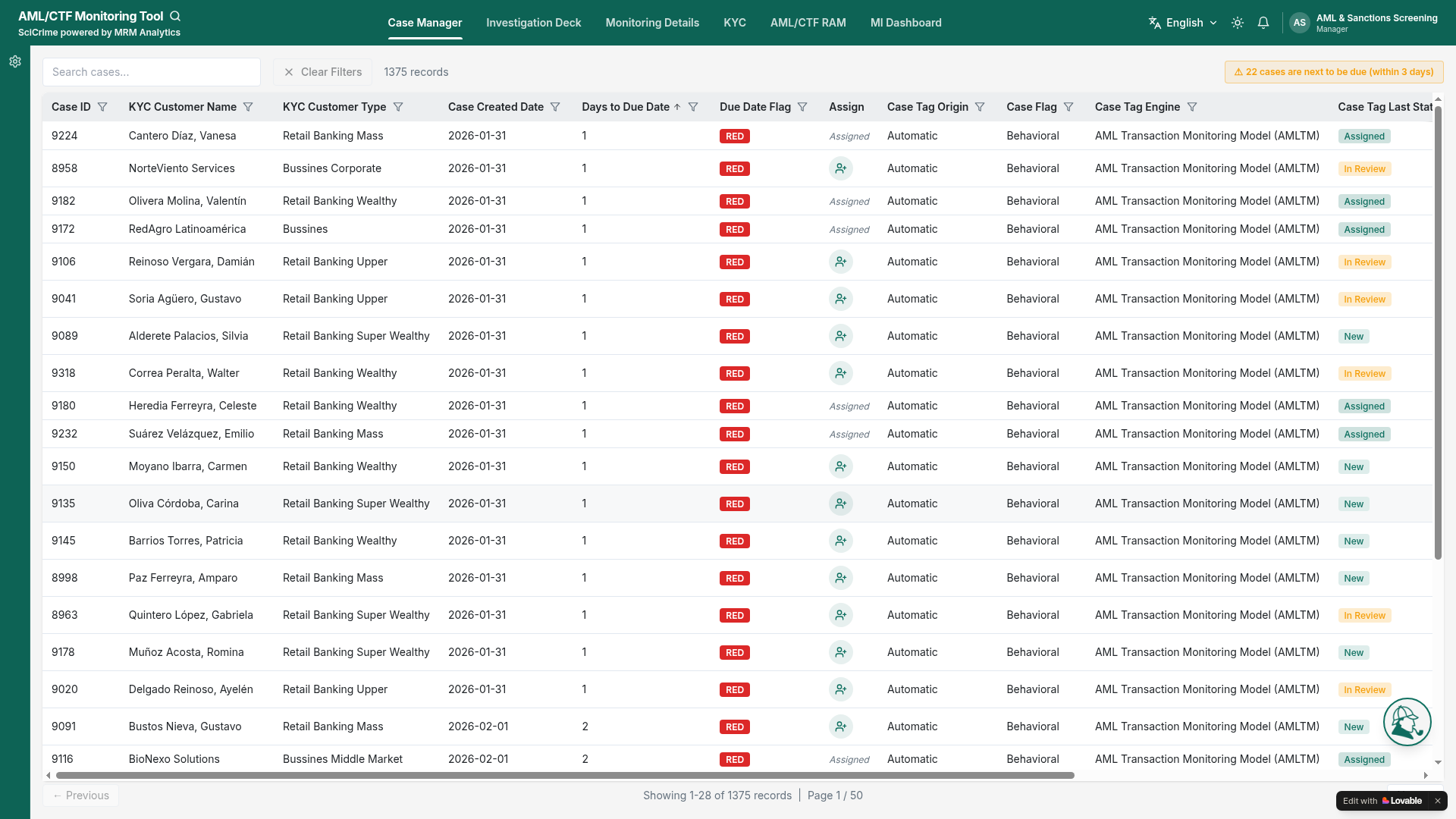
A banking use case for SciFraud: start from messy transactional data, build a risk engine, explain the alerts and give fraud teams a defensible shortlist of cases.
The task was not only to detect risk. It was to identify a short, auditable set of cases that fraud teams could understand, prioritize and act on.
Learning without a perfect fraud dataset. The model had to work with limited tagging and real banking data quality issues.
Low alert volume mattered. Fraud teams cannot work with endless false positives. The system needed precision and explainability.
Deploy inside client constraints. Deployment was designed for the client's infrastructure and governance context, with production-ready integration.
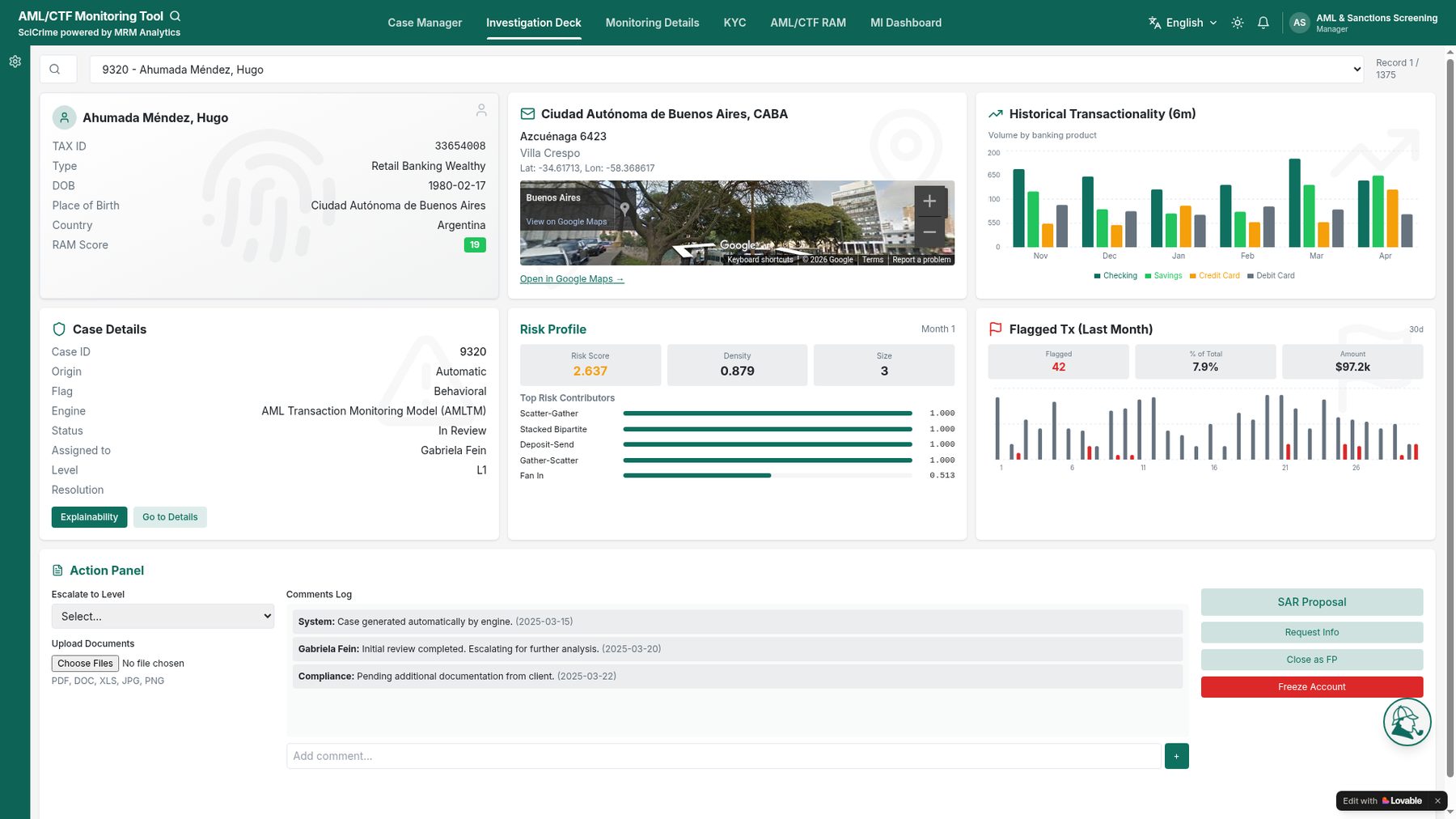
The transaction is not enough. SciFraud uses behavioral and contextual features to understand what is normal for a customer and what is suspicious.
SciFraud is not just a model. It is a pipeline from raw banking data to explainable operational intelligence.
Clean, engineer and structure transaction, channel and customer behavior data for model readiness.
Model anomalies around individual behavior, transaction context and patterns that traditional rules can miss.
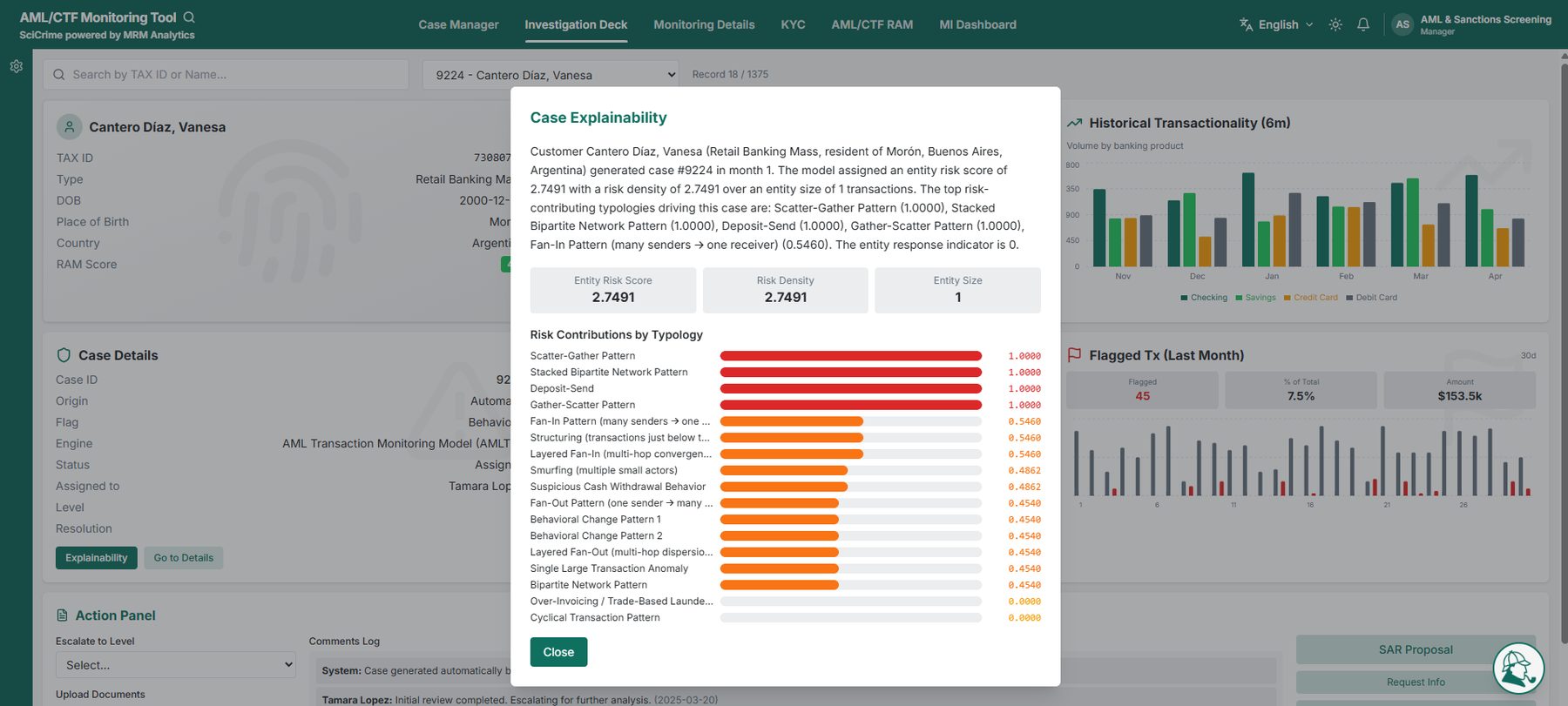
Deliver alert narratives that explain why the case is risky and what evidence should be reviewed by the fraud team.
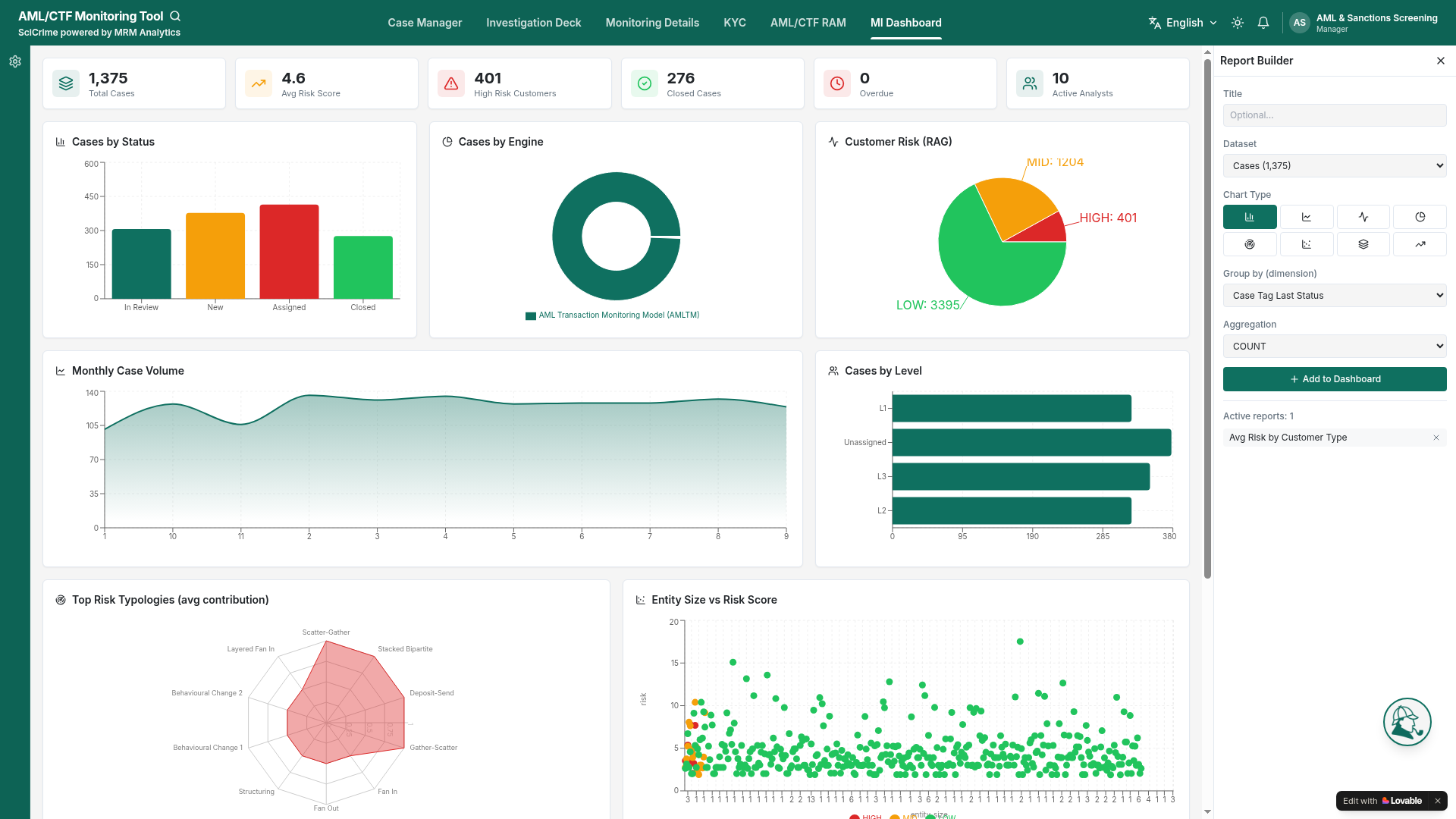
Measurable outcomes from the SciFraud deployment on the client's transactional data.
“The value is not only flagging a transaction. The value is telling the analyst why this customer, why this behavior and why now.”
— SciFraud engagement lead, MRM Analytics