Rules
Fuzzy logic & rule-based ML. Encodes expert knowledge and policy constraints as a first, explainable line of defense.

Minimize false positives and slash review times through advanced scientific AI, built to guarantee regulatory compliance.
Turning behavioral data into certainty: smarter anomaly detection powered by Bayesian Network AI models that learn each customer's normal and flag what doesn't fit.
Fuzzy logic & rule-based ML. Encodes expert knowledge and policy constraints as a first, explainable line of defense.
Bayesian networks. Per-customer behavioral fingerprints that surface anomalies without needing labeled fraud.
Graph neural networks. Learn from confirmed cases and money-flow structure to sharpen precision on known typologies.
UFDM and SFDM working together — unsupervised behavioral scoring plus supervised precision on known fraud.
Learns each customer's normal — flags what doesn't fit. An ensemble of Bayesian Networks builds a per-customer behavioral fingerprint from transaction history, then scores every new event by how likely it is to come from the real user vs. a fraudster.
Learns from confirmed fraud — sharpens what's already known. A classifier trained on historical labeled cases assigns a fraud probability to every new event. Training and prediction run as separate phases so the model improves continuously.
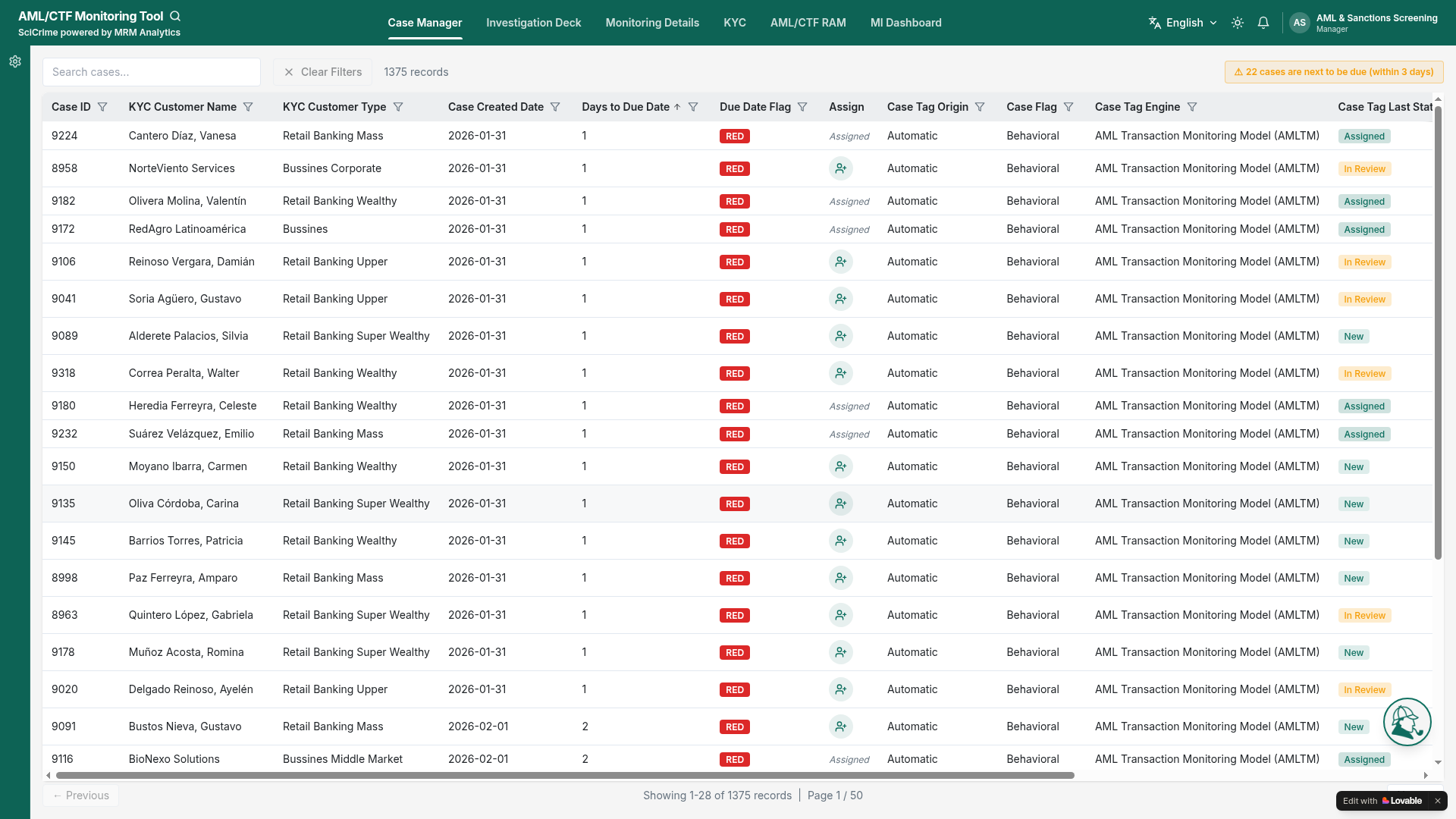
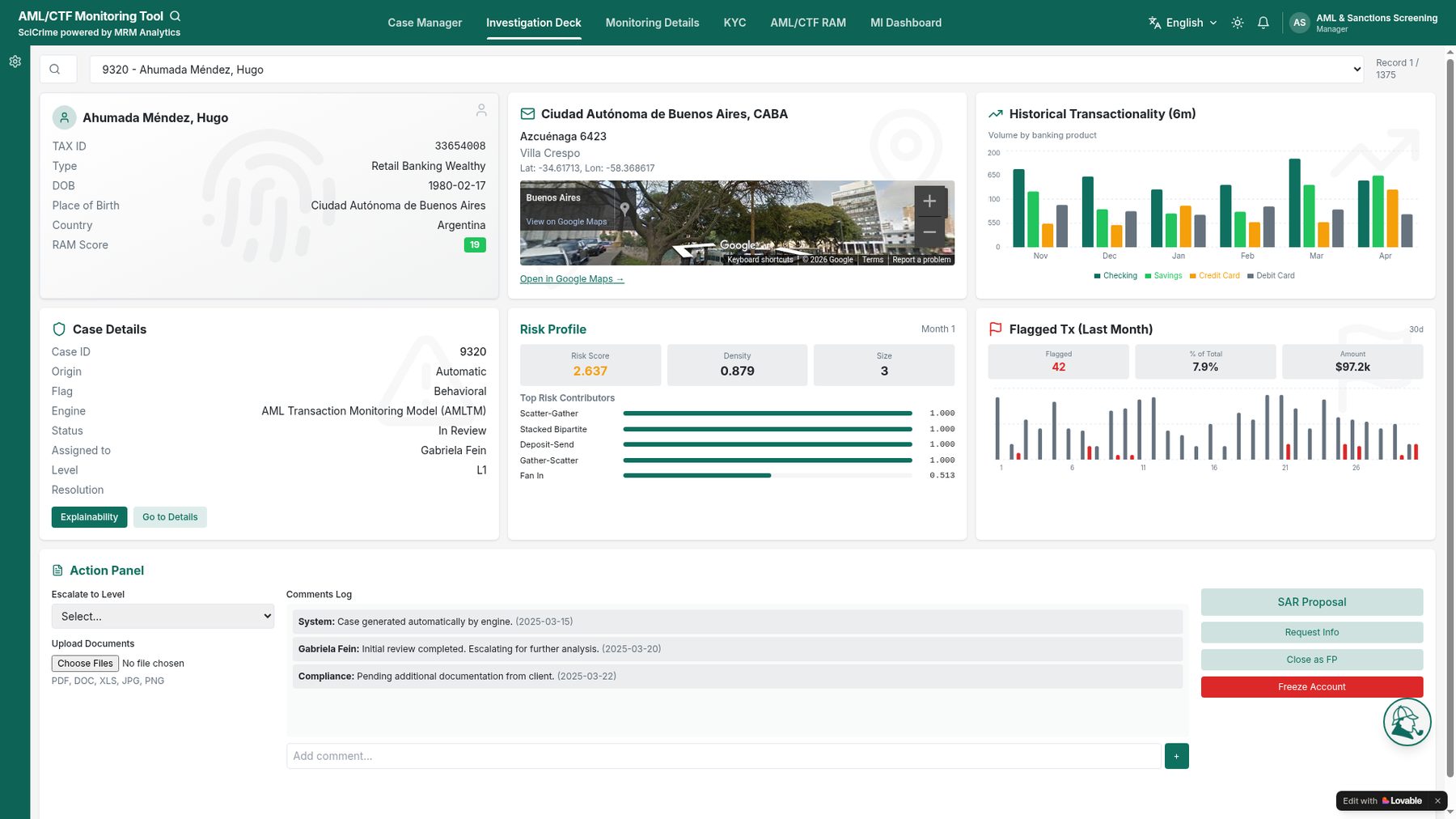
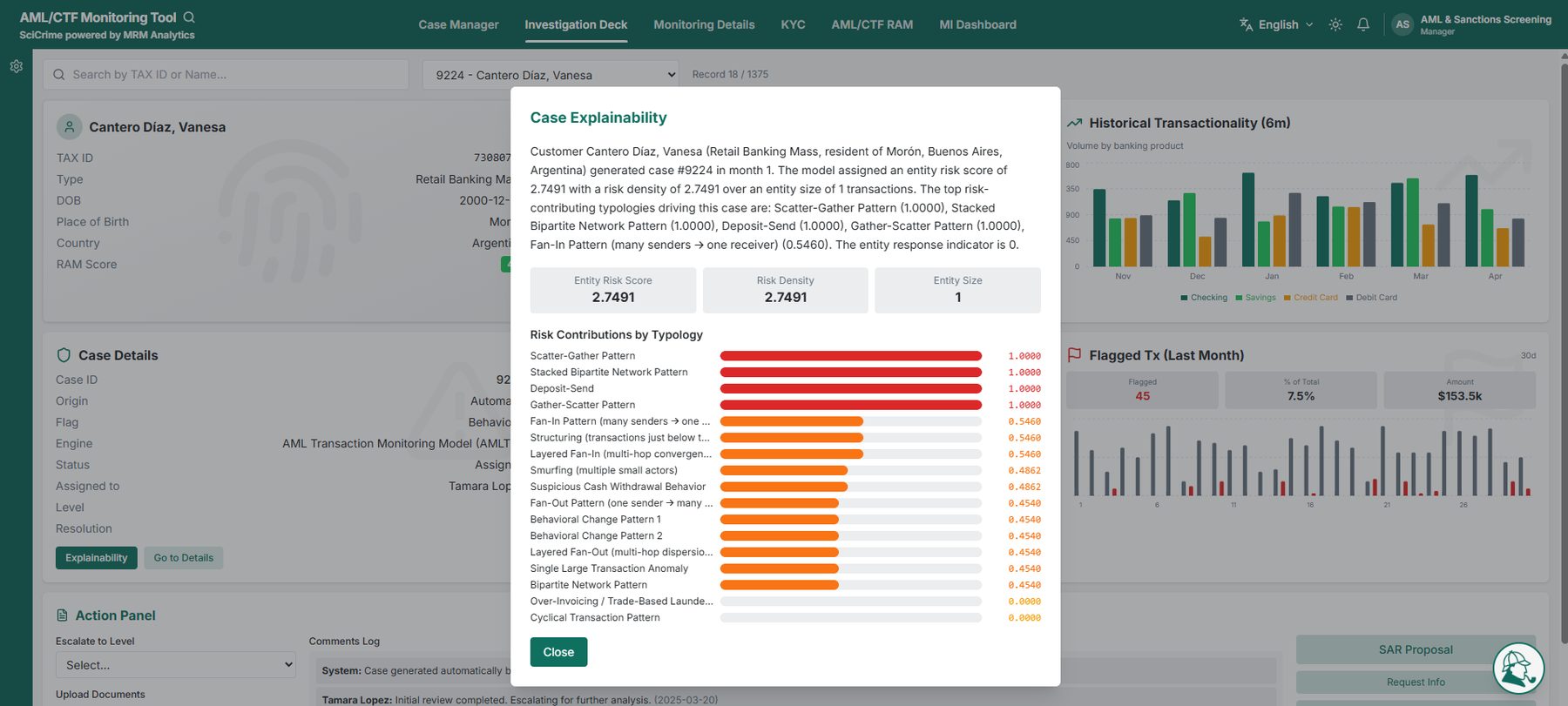
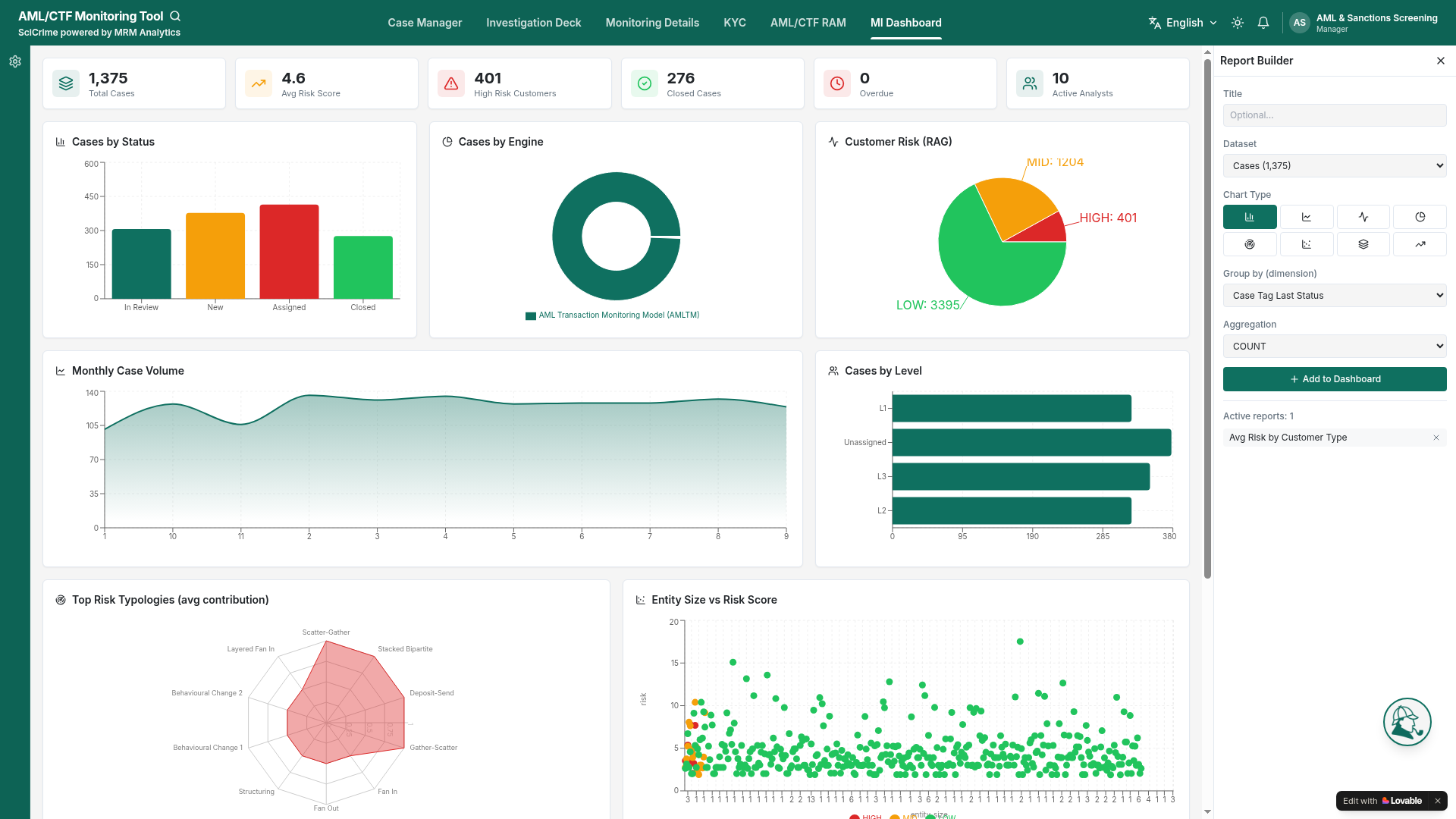
Behavioral baselines and probabilistic scoring to surface money-laundering patterns and sanctions exposure with fewer false positives.
Real-time anomaly detection on every payment — UFDM + SFDM working together to stop novel and known fraud as it happens.
Profiles employee and operator behavior to detect collusion, policy abuse and insider anomalies before they escalate.
Faster, sharper, and dramatically more efficient than static, rule-based, siloed systems.
Proactive, explainable, and scalable fraud detection — far beyond the static, rule-based, siloed systems used across the industry.
Higher detection accuracy that moves institutions from reactive case management to strategic risk leadership.
Detects emerging and never-before-seen fraud patterns the moment they appear in your transaction stream.
Up to 70% less effort on review, validation, and prioritization processes across the fraud operations stack.
Analysts focus on investigation, proactive prevention, and customer experience instead of repetitive triage.
Delivers value immediately — even with scarce, sparse, or incomplete historical fraud records.
We will map the decision, the data, the constraints and the product path before recommending a build.